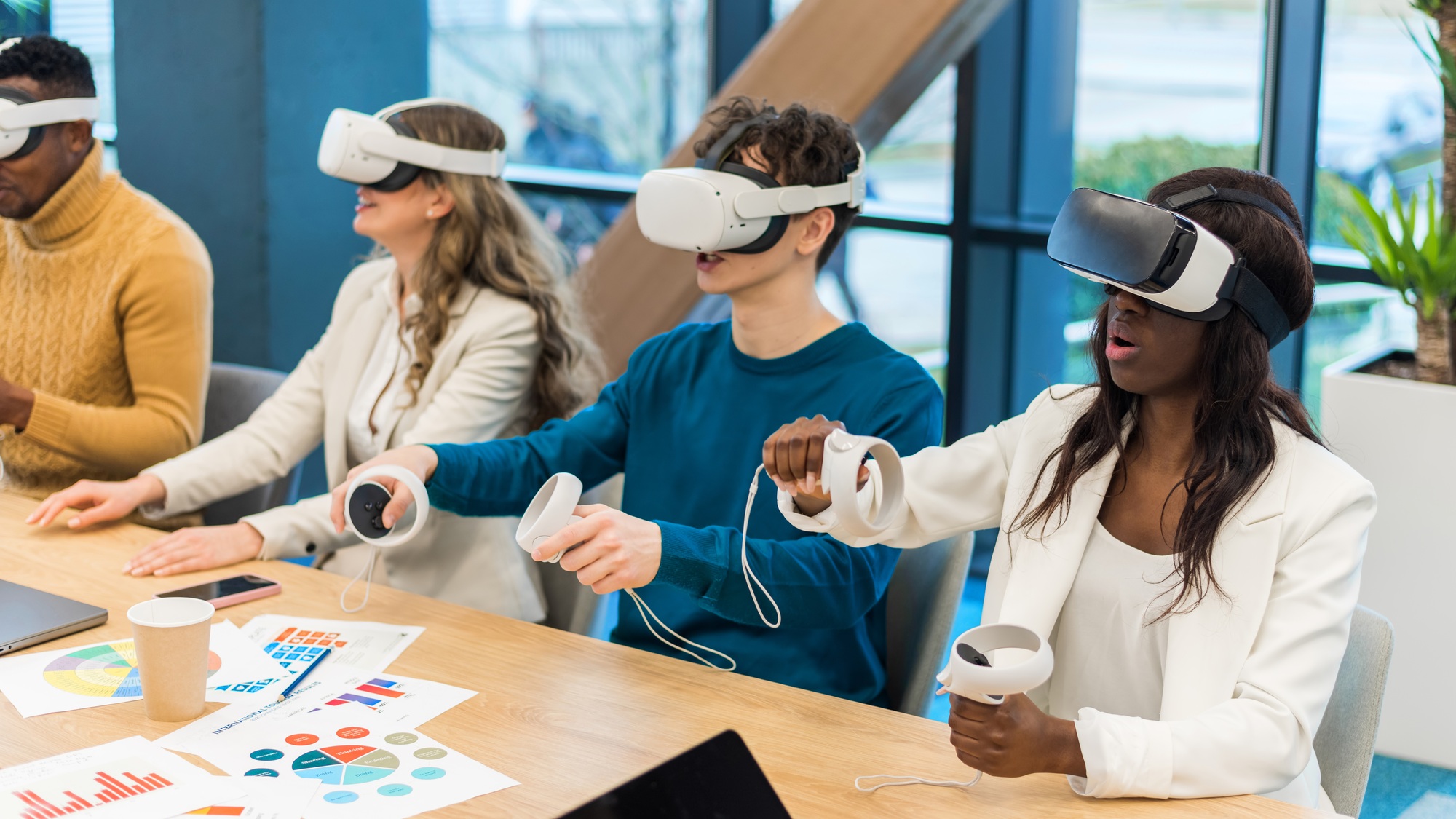
Virtual reality (VR) is increasingly being integrated into educational settings, revolutionizing traditional training methods and offering immersive learning experiences that were previously impossible.
Over recent years, advancements in VR technology have made it more accessible and affordable for schools and training institutions. This shift is driven by the need for more engaging, effective, and scalable learning solutions that can adapt to the diverse needs of students and professionals alike.
VR-based training programs are now utilized across various industries, including healthcare, aviation, manufacturing, and even military training. These programs provide realistic simulations that allow learners to practice skills in a safe environment, reducing risks and costs associated with real-world training.
The impact of VR on education extends beyond professional training. Educational institutions are incorporating VR to create interactive lessons in subjects like history, science, and geography, providing students with experiences that foster deeper understanding and retention of knowledge.
Experts believe that VR enhances engagement and motivation among learners, especially in fields where hands-on practice is critical. The ability to simulate complex scenarios helps learners develop critical thinking and problem-solving skills more effectively than traditional methods.
Furthermore, VR enables remote learning, making quality education accessible to students worldwide, regardless of geographical or economic barriers. This democratization of education has the potential to bridge educational gaps and provide equal opportunities for learners everywhere.
Looking ahead, the development of more sophisticated VR hardware and content is expected to further propel its adoption in education and training. The integration of artificial intelligence and data analytics into VR platforms will allow personalized learning experiences tailored to individual needs.
Educational institutions, corporations, and governments are investing heavily in VR technology, signaling a significant shift in how training and education are delivered worldwide. The ongoing innovation promises a future where immersive learning becomes a standard component of educational curricula.
What is the main benefit of using VR in education?
VR provides immersive, interactive experiences that improve engagement, understanding, and retention of knowledge, making learning more effective.
How does VR improve professional training?
VR allows learners to practice skills in realistic simulations, reducing risks and costs while enhancing hands-on experience and confidence.
Can VR help bridge educational gaps globally?
Yes, VR enables remote and accessible learning, providing quality education to students regardless of their location or economic background.